


Fire safety in a workplace rests on two things: a fire risk assessment, and the routine checks that keep the alarm, the lights, the extinguishers, the doors and the escape routes working. The risk assessment gets the attention. The routine checks are where things quietly slip, and where an inspecting officer looks first. Here is a practical calendar for a typical UK workplace, and what to write down.
try free for 30 days
Get your safety checks off paper in a day
Free for 30 days, no card needed

Quick start
Who is responsible
In England and Wales, the Regulatory Reform (Fire Safety) Order 2005 puts the duties on the "responsible person": usually the employer, or whoever controls the premises. Scotland has the Fire (Scotland) Act 2005 and the Fire Safety (Scotland) Regulations 2006, which use the term duty holder. Northern Ireland has the Fire Safety Regulations (Northern Ireland) 2010, which talk about the appropriate person.
The details differ, but the core duties are the same everywhere: carry out a fire risk assessment, put fire safety measures in place, and keep them maintained and in working order. In England and Wales, if you employ five or more people, you must record the significant findings of the risk assessment.
The checks below are the ones British Standards and government guidance commonly recommend. Your fire risk assessment decides what applies to your building and how often.
TagPoint helps you keep the record of each fire safety check and what was done about any fault. It does not make premises compliant, and this article is not legal advice. Your fire risk assessment, and a competent fire safety adviser, decide what your building needs.Daily and weekly checks
Escape routes and fire exits, daily or weekly. Many workplaces do a quick walk every day, or at least every week: routes clear of stock and pallets, fire exit doors unlocked and easy to open from inside, exit signs visible, and outside assembly areas clear.
Fire alarm test, weekly. BS 5839-1 recommends testing the alarm every week by operating a manual call point, at about the same time each week so that staff know it is a test. Use a different call point each week, in rotation, so that every one is tested over time. Record which call point was used, that the panel received the signal and that the sounders could be heard.
Fire doors in daily use. Doors that are used all day need looking at often: not wedged open, closing fully on their own from any angle, latching where they should. Your fire risk assessment sets the frequency, and weekly is common for busy doors.
Monthly checks
Emergency lighting functional test. BS 5266-1 recommends a short test every month, simulating a mains failure, to check that every emergency light and illuminated exit sign comes on. Keep the test short, so the batteries are ready if a real power cut follows. Note any fitting that doesn't light.
Fire extinguishers, visual check. BS 5306-3 expects the premises to check extinguishers monthly between services. For each extinguisher point:
- the extinguisher is in its place, visible and not blocked;
- the safety pin and tamper seal are intact;
- the pressure gauge, where there is one, is in the green;
- there is no visible damage, corrosion or leak;
- the operating instructions face outwards and can be read;
- the service label is in date.
Fire doors, detailed check. Self-closers, hinges, intumescent strips and smoke seals, the gaps around the door, glazing and signs. Monthly suits many workplaces; your fire risk assessment may say otherwise.
Fire blankets and other equipment. In place, undamaged and easy to reach.
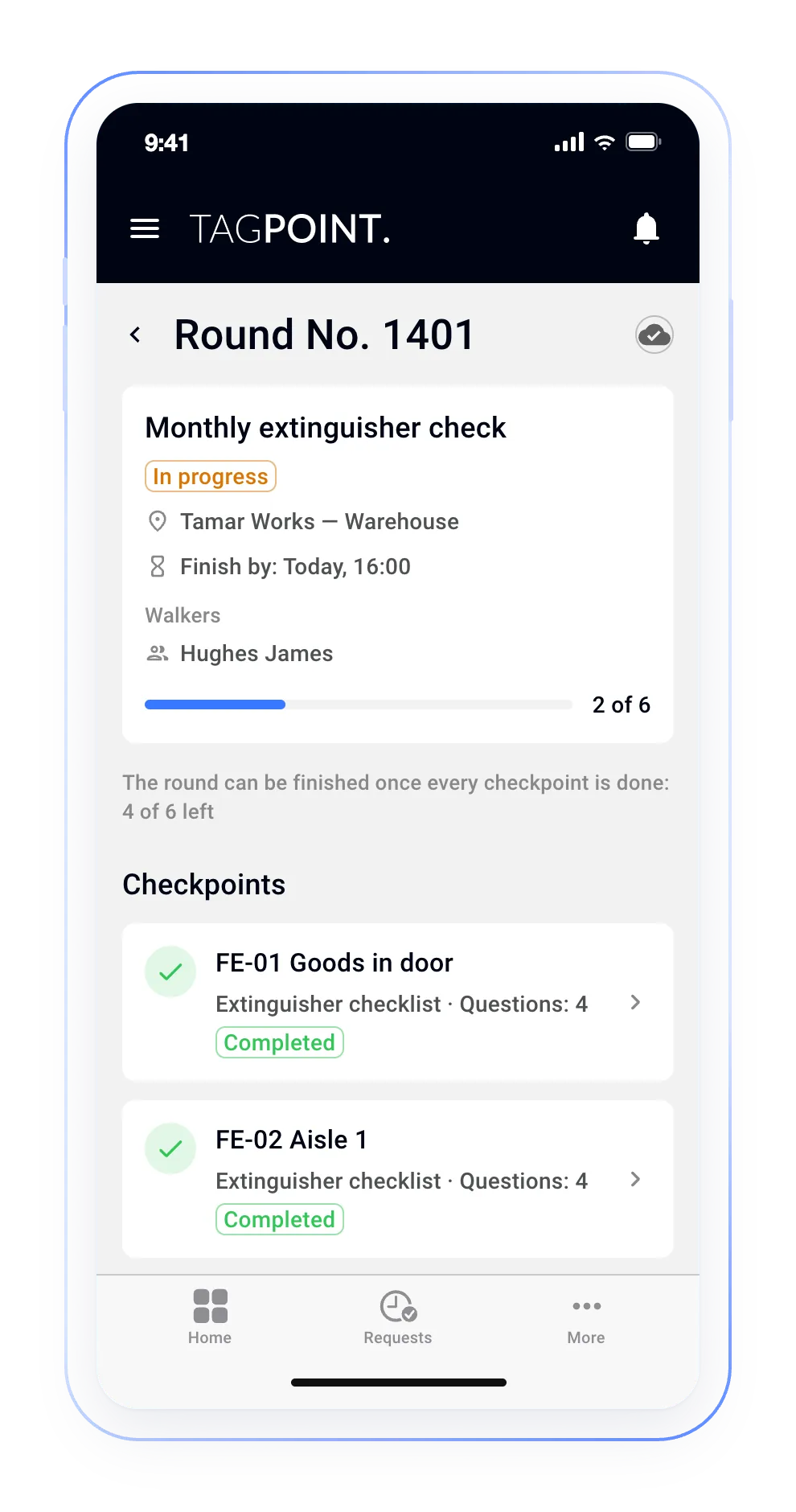
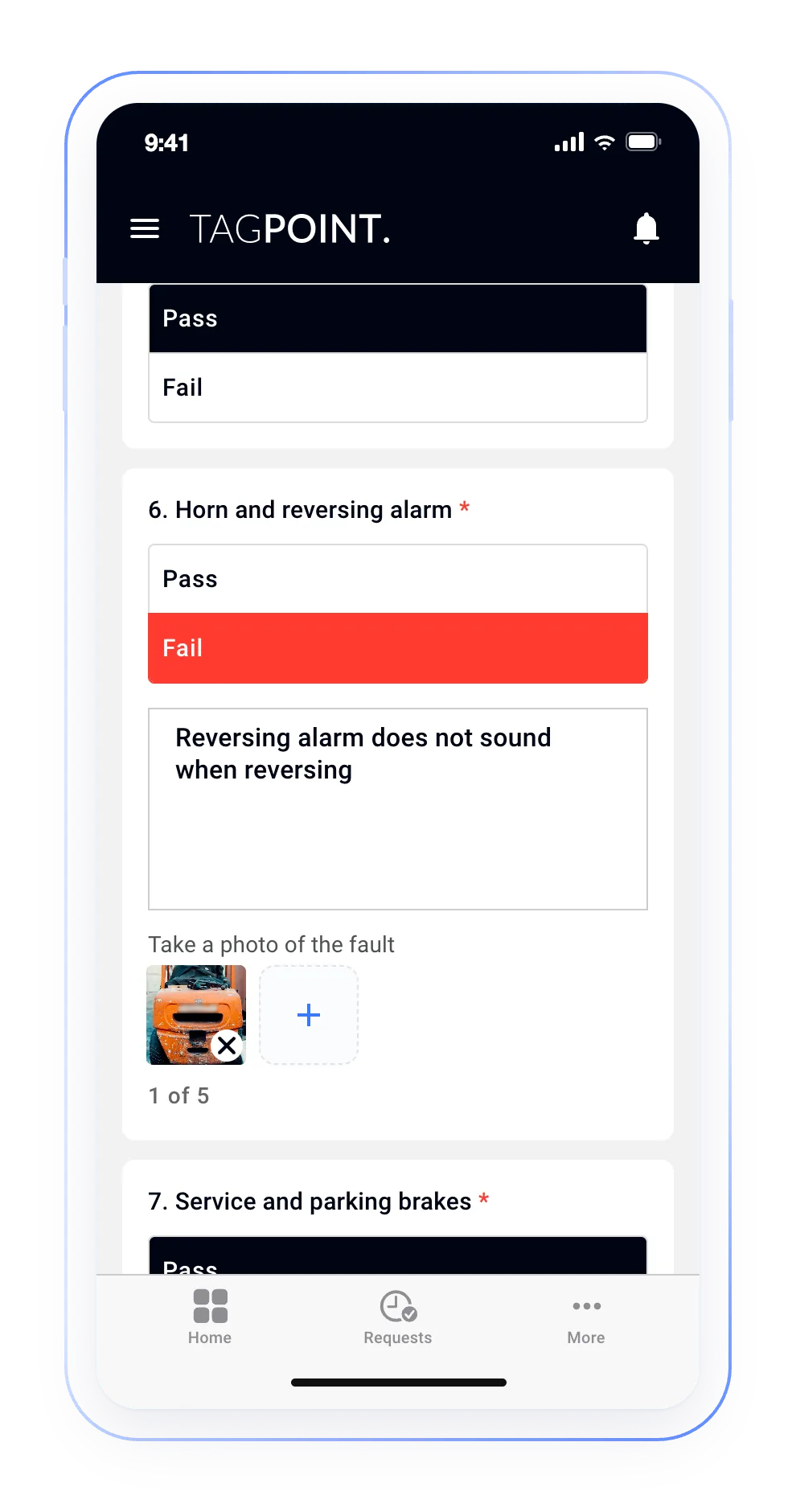
The monthly extinguisher check, and a failed item with its comment and photo
Six-monthly and yearly checks
Some checks need a competent person rather than a member of staff.
Fire alarm service. BS 5839-1 recommends inspection and servicing by a competent person at intervals of no more than six months.
Emergency lighting full-duration test, yearly. BS 5266-1 recommends a yearly test for the full rated duration of the lights, often three hours, carried out so the building is not left without emergency lighting straight afterwards.
Fire extinguisher service, yearly. BS 5306-3 calls for a basic service every year by a competent person, with extended servicing at longer intervals, which your service company will schedule.
Fire drill, at least once a year. Government guidance recommends a drill at least once a year, and more often where staff change frequently or the building is complex. Record how long it took, any problems and what you changed afterwards.
Fire risk assessment review. There is no fixed legal interval. Review it regularly and whenever something significant changes, such as a layout change, new processes or materials, or a fire or near miss. Many businesses review it every year as a matter of routine.
Training. Refresh fire awareness training for staff and fire marshals, and record who attended.
| Check | How often | Who | Reference |
|---|---|---|---|
| Escape routes and exits | Daily or weekly | Staff or fire marshal | Fire risk assessment |
| Fire alarm call point test | Weekly | Fire marshal | BS 5839-1 |
| Emergency lighting functional test | Monthly | Trained staff | BS 5266-1 |
| Extinguisher visual check | Monthly | Fire marshal | BS 5306-3 |
| Fire doors | Weekly to monthly | Fire marshal | Fire risk assessment |
| Fire alarm service | At most every 6 months | Competent engineer | BS 5839-1 |
| Emergency lighting full-duration test | Yearly | Competent person | BS 5266-1 |
| Extinguisher service | Yearly | Competent engineer | BS 5306-3 |
| Fire drill | At least yearly | Responsible person | Government fire safety guidance |
The fire log book
The fire log book is where all of this comes together. The law doesn't prescribe a format, but it is the usual way to show that fire safety measures are being maintained, and it is one of the first things an inspecting officer from the fire and rescue service will ask to see. It should hold:
- every test and check, with the date, the result and who did it;
- every fault found and what was done about it, with the date;
- service visits by contractors, with their reports;
- fire drills and training, with who took part;
- false alarms and their causes.
Common gaps are easy to spot in a paper log: the same call point tested every week for a year, monthly emergency lighting tests that stop in the summer holidays, extinguisher checks that note "missing" with no record of a replacement, and a log book that lives at a different site from the building it covers.
Keeping the calendar on track
This is how workplaces keep fire safety checks in TagPoint.
A QR label at each point: each call point, extinguisher point and fire door. It is best to label the place rather than the extinguisher itself, since extinguishers get swapped at service. Scanning the label opens the right check.
Walk-round checks for a floor or a building. One monthly check visits every extinguisher point on a floor in order, with progress shown, so nobody misses the one behind the stack of pallets.
Schedules with deadlines. The weekly alarm test, monthly emergency lighting and extinguisher checks, and door checks are set up as recurring checks, each assigned to a person or a role with a deadline. A missed check shows up as overdue, and a manager is told.
Faults with owners. A failed item asks for a comment and a photo, and raises an issue for whoever arranges repairs, with a deadline. The issue keeps its history until someone closes it.
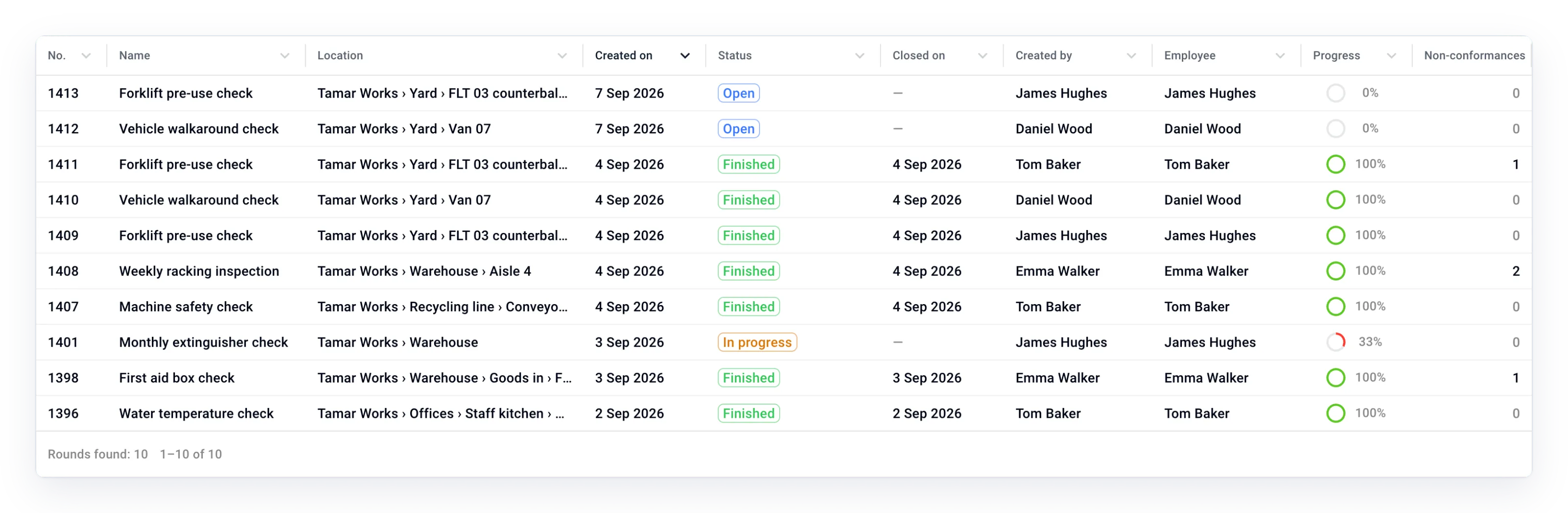
The checks log: every fire safety check with who did it, when and what failed
A record you can show. The checks log lists every check with the person, the place, the time and the number of failed items. You can print any check, or export report tables to Excel, to keep with the contractors' service reports in your fire log.
Our free fire extinguisher check template is a good place to start. Read more about fire safety checks in TagPoint, or browse all our check templates.