


Walk round most UK factories and you will find check sheets everywhere: on forklifts, on machines, by the fire panel, on the end of the racking, inside the first aid box lid. Trying to move all of them to a phone in one go is the fastest way to stall. The sites that get it right start small, with a few scheduled checks, and make sure that every failed item reaches someone who fixes it.
try free for 30 days
Get your safety checks off paper in a day
Free for 30 days, no card needed

Quick start
Why start small
We set up checks for production sites of all sizes, and the pattern is the same. A project that starts by listing every check on site, every room and every piece of kit tends to spend months on set-up and lose its supporters before anyone has scanned a label. A project that starts with a handful of checks that happen often, and gets the follow-up right, is running within weeks and grows from there.
There is a second reason. The first checks you move set the habits: how people scan, how faults are reported, how quickly a manager responds. Get those right on five checks and the next twenty are easy.
How to choose the first checks
Three questions sort the list quickly.
- Does it happen often? Checks done every shift or every week build the habit fastest, and show the biggest gain over paper.
- Would a missed check hurt someone? Start where a fault left unreported could injure a person: moving vehicles, moving machinery, fire.
- Is it the record you'd struggle to produce? If an inspector or your insurer asked for last month's sheets tomorrow, which file would you dread opening?
Checks that score on all three go first. Checks done once a year by a contractor, who brings their own report, can wait.
The first five checks for most factories
Every site is different, but these five come up again and again.
| Check | How often | Who | The UK rule behind it |
|---|---|---|---|
| Forklift and lift truck pre-use check | Start of each shift | The operator | PUWER 1998, LOLER 1998, HSE L117 |
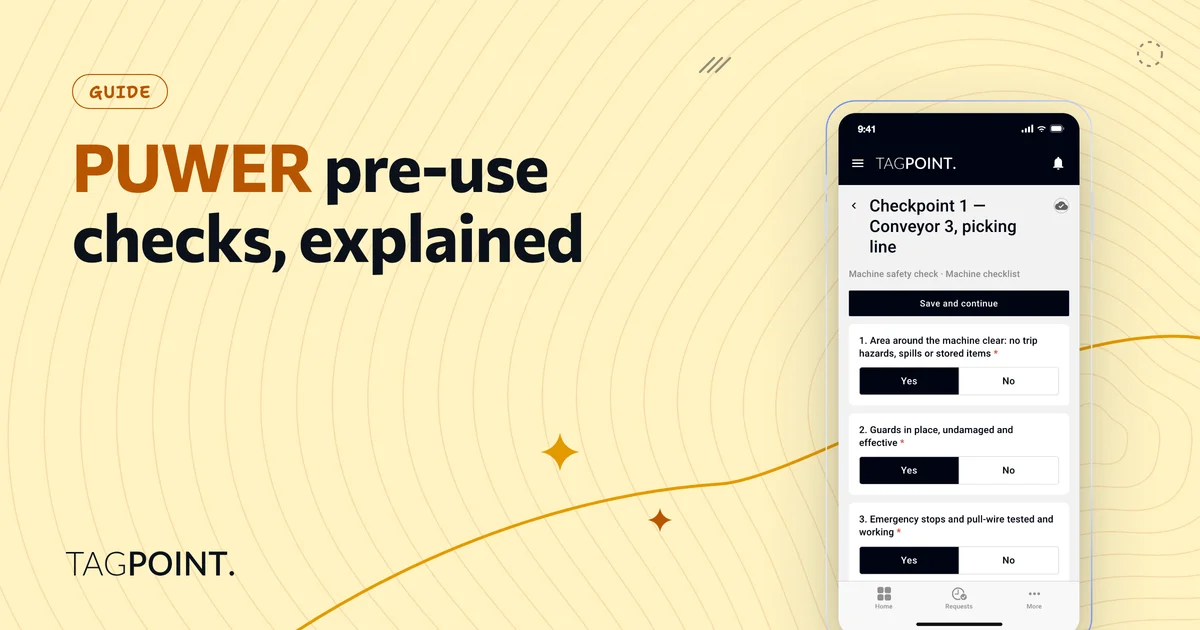
| Machine safety: guards, emergency stops, leaks | Each shift or daily, set by risk | The operator or setter | PUWER 1998, regulations 6 and 11 |
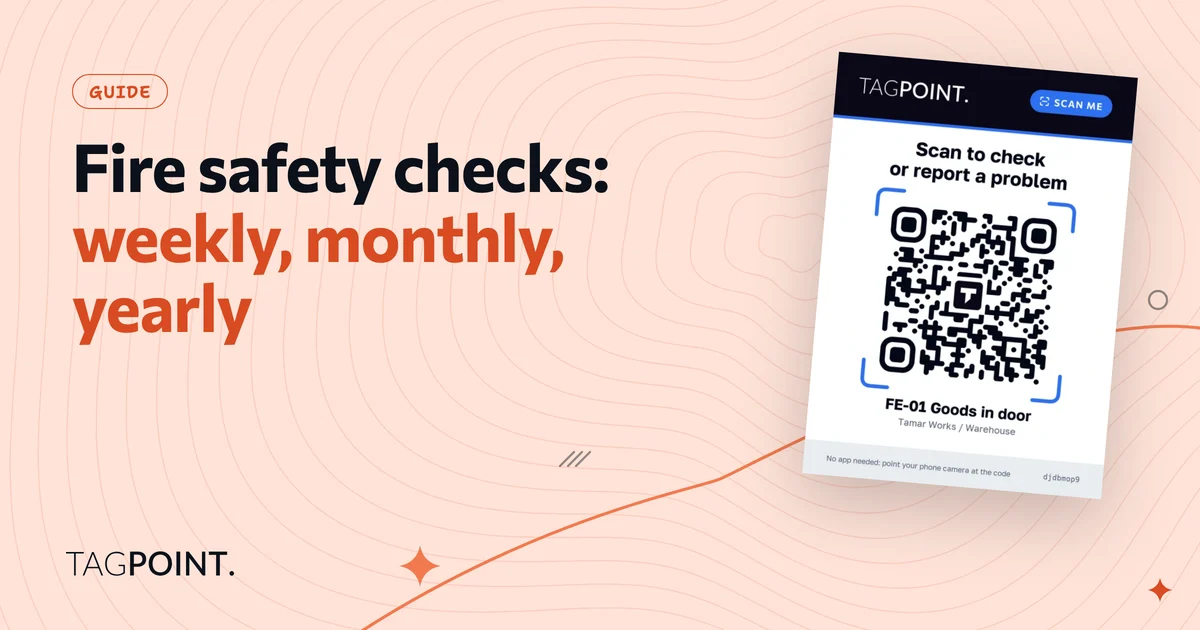
| Fire safety: alarm call point test, extinguishers, escape routes | Alarm weekly, extinguishers monthly, routes daily or weekly | A fire marshal | Regulatory Reform (Fire Safety) Order 2005, BS 5839-1, BS 5306-3 |
| Racking visual inspection | Weekly, or as your risk assessment sets | The person responsible for racking safety | BS EN 15635, SEMA guidance |
| First aid box contents | Monthly is common practice | A first aider | Health and Safety (First-Aid) Regulations 1981 |
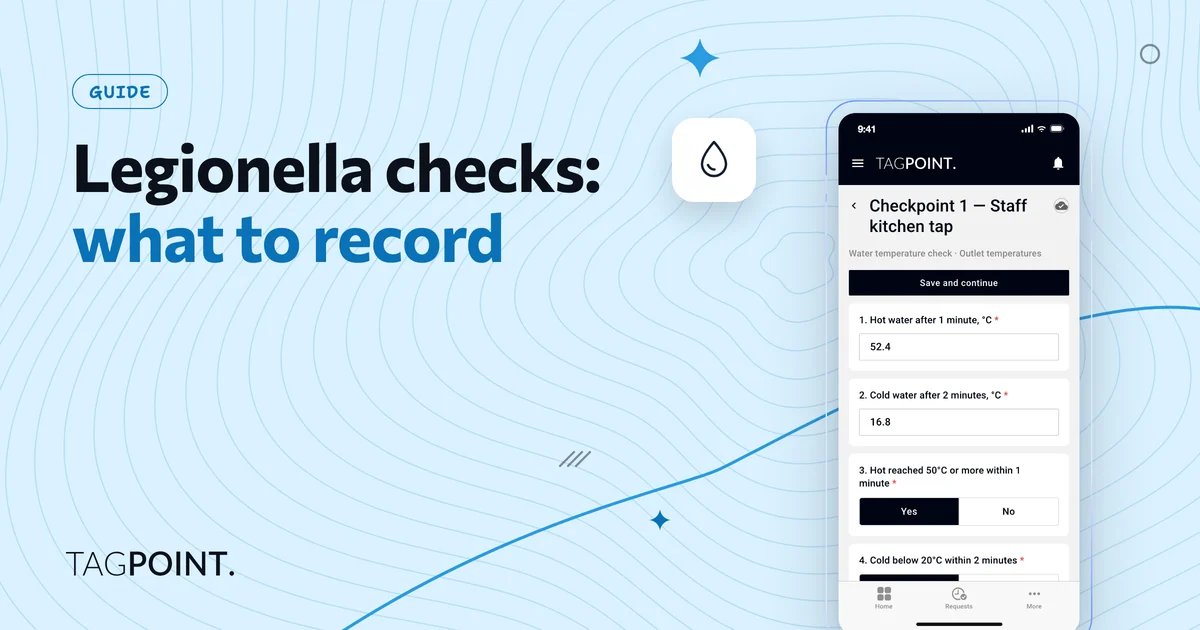
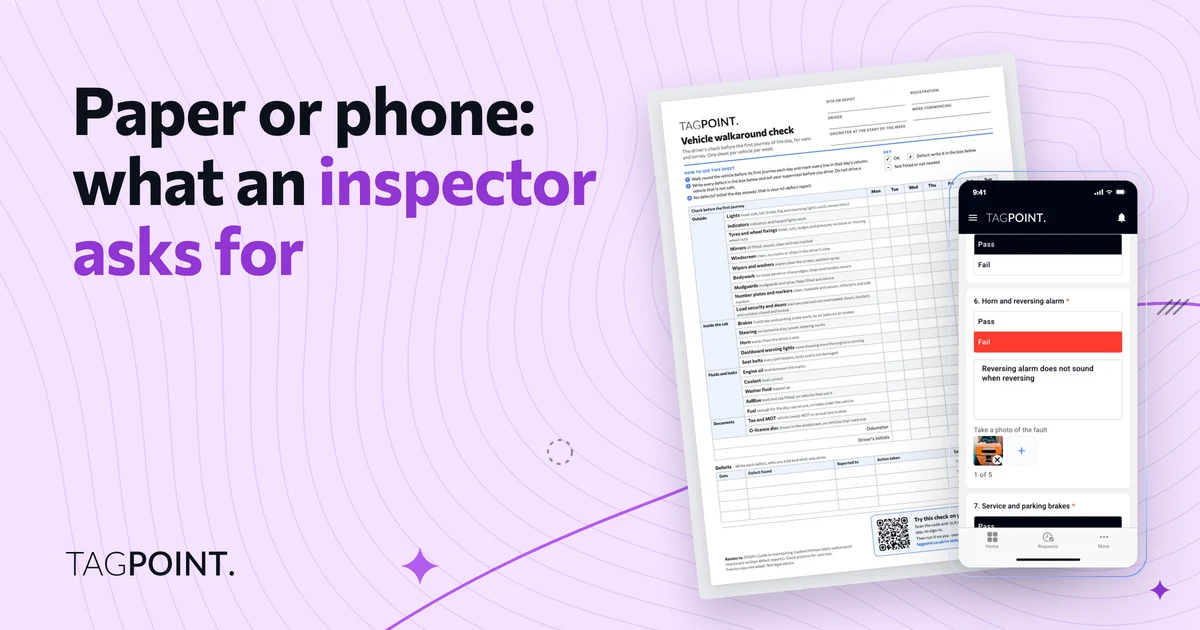
Once these are running, the usual next wave is local exhaust ventilation user checks (with the thorough examination at least every 14 months under COSHH), eyewash stations, ladders and steps, water temperatures for legionella control, and walkaround checks on any road vehicles.
TagPoint helps you keep the records of your checks and their follow-up. It does not make a site compliant on its own, and this article is not legal advice. Your risk assessments set the right checks and frequencies for your site.Our guides go deeper on several of these: PUWER pre-use checks, weekly racking inspections and fire safety checks by week, month and year.
Follow-up is the point
A digital check sheet that nobody acts on is just a faster way to fill in a form. The value is in what happens when an item fails.
Think about what a failed item on paper says to an inspector: someone saw the fault and wrote it down. If nothing else on file shows that it was dealt with, the record works against you. So before you go live, decide three things for every check:
- Who gets each kind of fault. Forklift faults to the workshop, machine faults to maintenance, fire faults to the facilities lead or the fire marshal.
- How fast it should be fixed. A missing extinguisher pin is not the same as a missing machine guard. Give each kind of fault a sensible deadline, and mark the serious ones urgent.
- Who is told when it slips. A manager should hear about overdue faults without having to go looking.
In TagPoint, each failed answer can raise its own issue, assigned to a person or a role, with a deadline, and the manager is told when it is overdue. The issue keeps its history: the photo from the check, who had it, what they did and who closed it, and when.
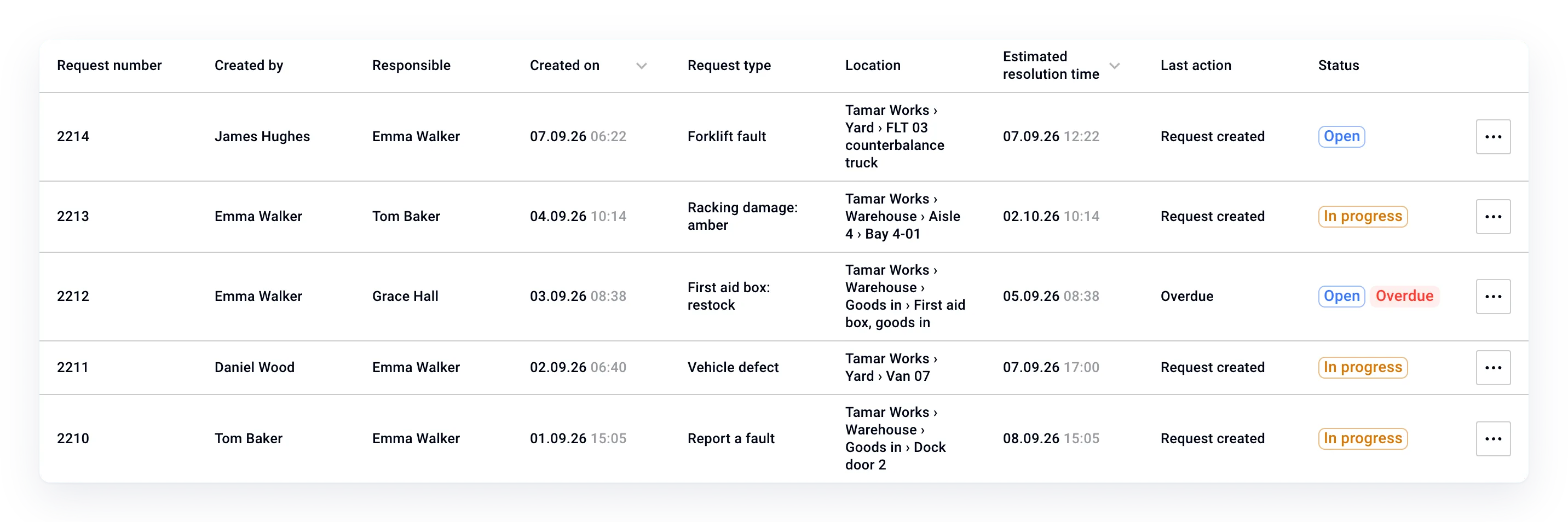
Faults raised by failed checks, with owners and deadlines, and the overdue ones flagged
A 30-day plan
This plan works for a single site of 20 to 250 people.
Week 1: list and label. List the items for your five checks: each truck, each machine, each extinguisher point, each run of racking, each first aid box. Write the questions, starting from your current sheets and cutting anything a person can't answer by looking. Print and stick a QR label on each item. We can set this up with you and print durable labels.
Week 2: pilot one check. Pick the forklift pre-use check or the machine safety check and run it in one area or on one shift. Show operators how to scan, answer and photograph a fault. Look at every failed item every day.
Week 3: set the follow-up. Agree who receives each kind of fault and the deadlines. Close the first faults quickly and tell the team you have. Fix any questions that confused people.
Week 4: add the rest and schedule them. Add the other four checks, each as a recurring check with a deadline (every shift, weekly or monthly), assigned to a person or a role. Hold a short review at the end of the week with the checks log open.
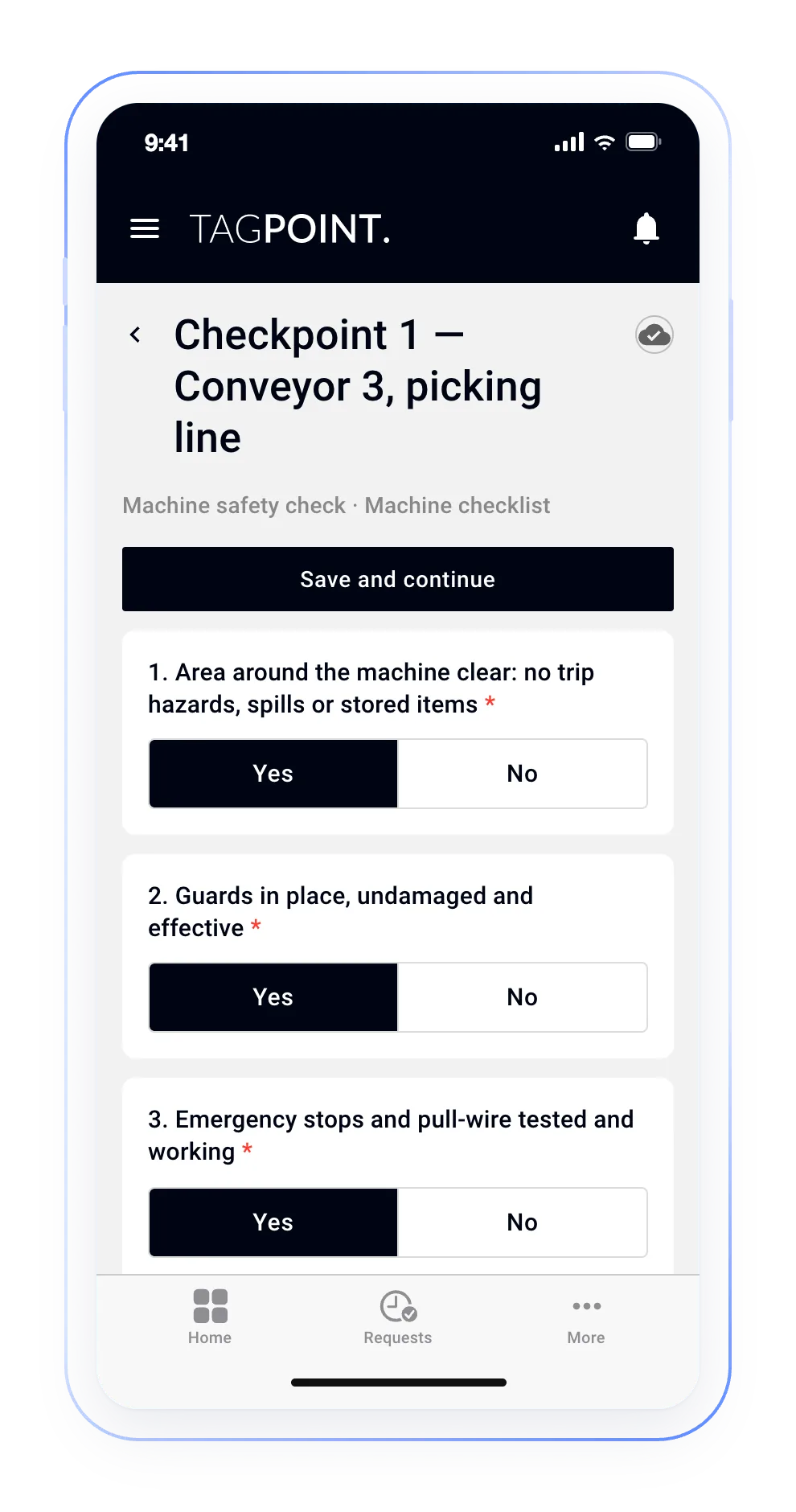
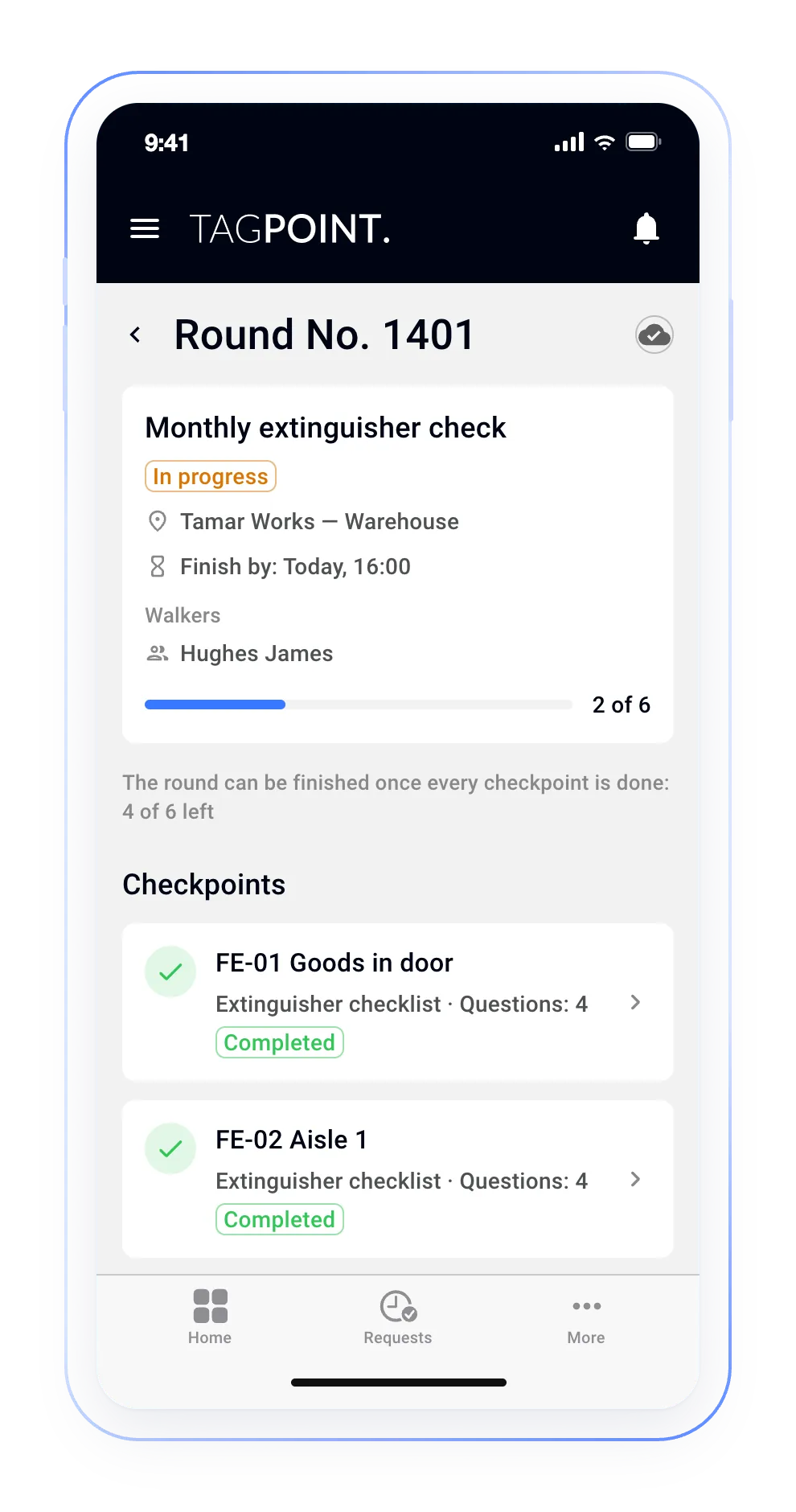
A machine safety check and a monthly extinguisher check, both opened by scanning the item's label
What to measure, and what to avoid
Four numbers tell you whether it is working. You can see all of them in the checks log and the issue list, and export them to Excel for a monthly report.
- Checks done on time, as a share of those scheduled.
- Failed items per week, which should not be zero. A month with no failures usually means nobody is looking closely.
- Issues closed by their deadline.
- Overdue issues at the end of each week.
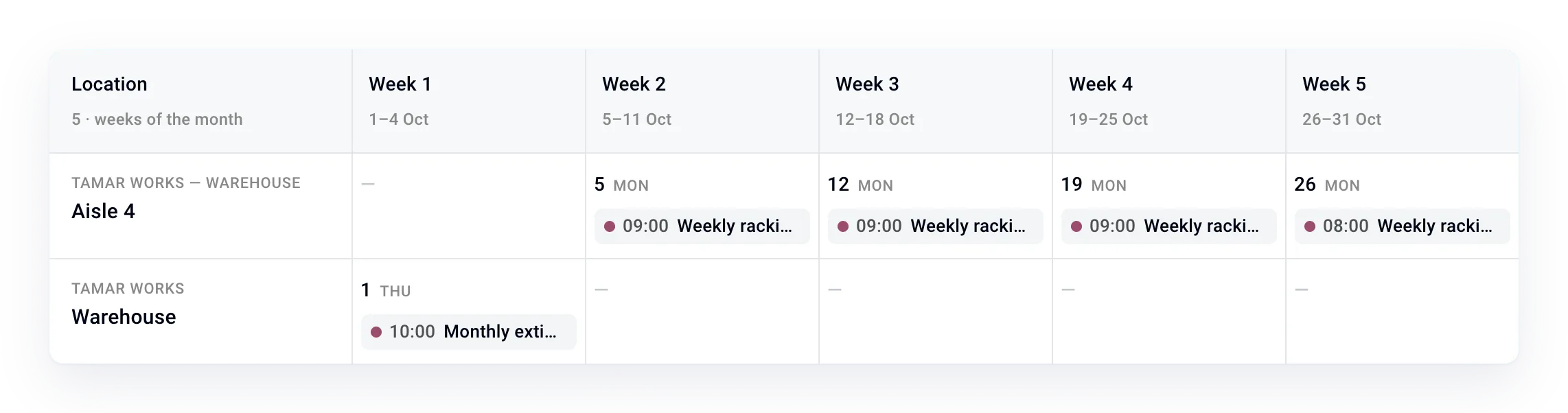
Scheduled checks across the month, so gaps show up as they happen
And five mistakes we see most often:
- Copying a 60-question sheet as it is. Long checks get rushed. Keep each one to what matters.
- One QR code for the whole site. Put a label on each item, so the scan opens the right check and the history builds up per item.
- Faults with no owner. Decide who gets them before you go live.
- A manager who never opens the log. The team notices within a week.
- Every department at once. Prove it in one area, then spread.
If you want a head start, our free check templates cover forklifts, machine safety, racking, fire extinguishers and first aid boxes. You can also see how TagPoint fits manufacturing as a whole.