

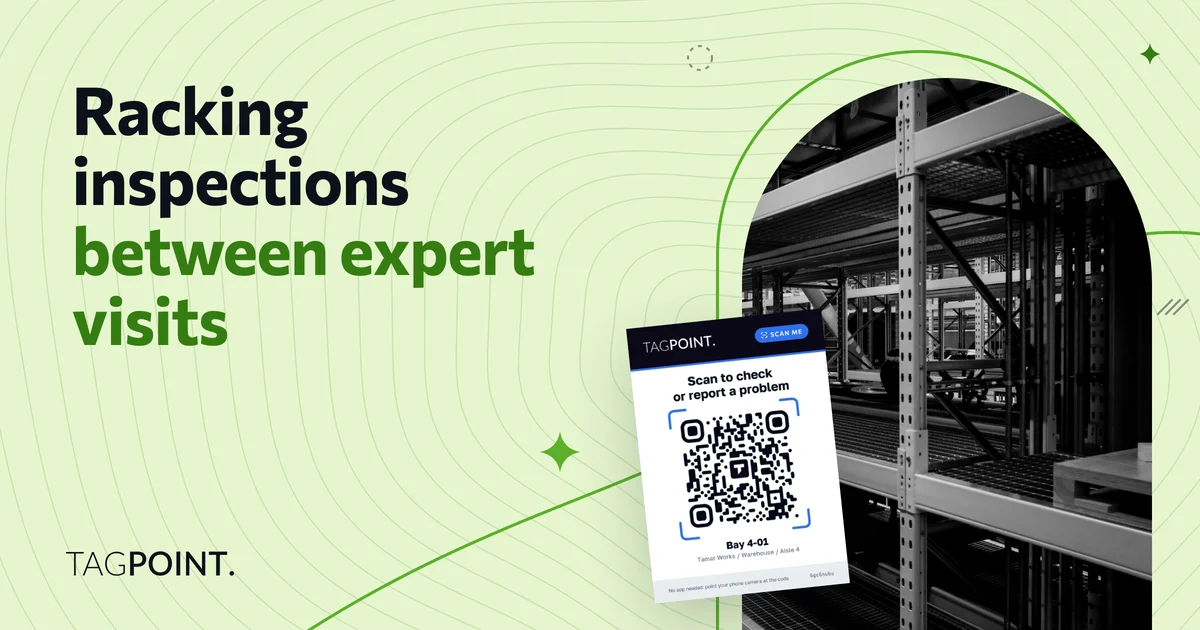

Most racking damage doesn't happen on the day of the annual inspection. It happens on an ordinary Tuesday, when a reach truck clips an upright on the way out of an aisle. The expert who visits once a year will find it eventually. The question is how long the damaged bay stays loaded before anyone notices. That is what weekly inspections are for.
try free for 30 days
Get your safety checks off paper in a day
Free for 30 days, no card needed

Quick start
Three levels of racking inspection
BS EN 15635, the European standard for using and maintaining steel static storage systems, and the guidance from SEMA, the UK Storage Equipment Manufacturers' Association, describe three levels of inspection that work together.
| Level | Who | When |
|---|---|---|
| Immediate reporting | Anyone who causes or sees damage | Straight away, every time |
| Regular visual inspection | The person responsible for racking safety, or someone trained by them | Weekly, or at another regular interval set by your risk assessment |
| Expert inspection | A technically competent person, such as a SEMA Approved Rack Inspector (SARI) | At least every 12 months |
HSE's guide to warehousing and storage, HSG76, points to the same approach. The expert inspection is the thorough one, with measurements and a written report. The weekly inspection is visual and quick, and it is the one that catches damage early.
TagPoint helps you keep the record of each racking inspection and the repairs that follow. It does not replace an expert inspection, and this article is not legal advice. For the full requirements, read BS EN 15635, SEMA's guidance and HSE's HSG76.The person responsible for racking safety
SEMA calls this person the PRRS, the Person Responsible for Racking Safety. BS EN 15635 uses the broader name PRSES, the Person Responsible for Storage Equipment Safety. Whatever the title, someone has to own racking safety on each site: arranging inspections, making sure damage is reported, deciding what is offloaded and getting repairs done.
In a small warehouse, this is often the warehouse manager or the H&S lead. The weekly walk can be done by a trained team leader, but the PRRS should see every result and act on anything amber or red.
Green, amber and red
SEMA and BS EN 15635 grade damage in three levels. The expert inspector sets the levels in a formal report; on a weekly walk, the same colours are a practical way to decide what to do next.
| Level | What it means | What to do |
|---|---|---|
| Green | Damage within acceptable limits | Record it and look at it again at the next inspection. The rack stays in use. |
| Amber | Damage that needs repair, but not immediate offloading | Mark the location. Once it is emptied, do not reload it until it is repaired. Get it repaired within four weeks; if it isn't, treat it as red. |
| Red | Very serious damage | Offload the affected area straight away and isolate it until it is repaired, usually by replacing the damaged part. |
If anyone is unsure whether damage is amber or red, treat it as red and ask the PRRS. Weekly inspectors are not expected to measure deflection or bends; that is the expert's job.
What to look at each week
A weekly walk covers every aisle. Most damage is at forklift height and in the bottom metre of the uprights, so that is where to look hardest.
- Uprights: dents, bends, splits or twisting, especially near the floor and at aisle ends.
- Beams: bends, damage or visible sagging under load.
- Beam connectors and safety locks: every beam end engaged, every safety lock or pin present.
- Bracing: bent or missing diagonal and horizontal bracing in the frames.
- Base plates and floor fixings: present, undamaged and bolted down.
- Column guards and end barriers: in place and not hiding damage behind them.
- Load notices: the safe working load signs are present and readable, and loads match them.
- Pallets and loads: no broken pallets, nothing overhanging, nothing stored on top that shouldn't be.
- The rack as a whole: nothing visibly out of line or leaning.
A walk-round with a short list like this takes far less time than people expect, and gets quicker as the team learns where the trouble spots are. Our free racking inspection template follows the same list.
What to record
A weekly racking record should show, for each inspection:
- the date and the inspector's name;
- that every aisle was covered, not just the ones where damage was found;
- for each defect, the exact location: aisle, bay and beam level;
- the component and the damage level: green, amber or red;
- a photo;
- the action taken straight away: marked, offloaded, isolated;
- who owns the repair, the deadline, and the date it was repaired and signed off.
Keep these records alongside the expert's reports. When the expert visits, they will want to see what was found between visits and what was done about it. When an insurer or an inspector asks about racking, the weekly records are often what they look at first.
Running weekly inspections on a phone
This is how warehouses run weekly racking inspections in TagPoint.
A QR label at each run end, on the end frame facing the aisle, at about eye height and above any column guard, out of reach of passing forks. Scanning it opens the inspection for that run.
A walk-round check through the bays. One check visits each bay in the run in order and shows how many are done, so nobody has to remember where they got to. Each component gets a damage level: no damage, green, amber or red.
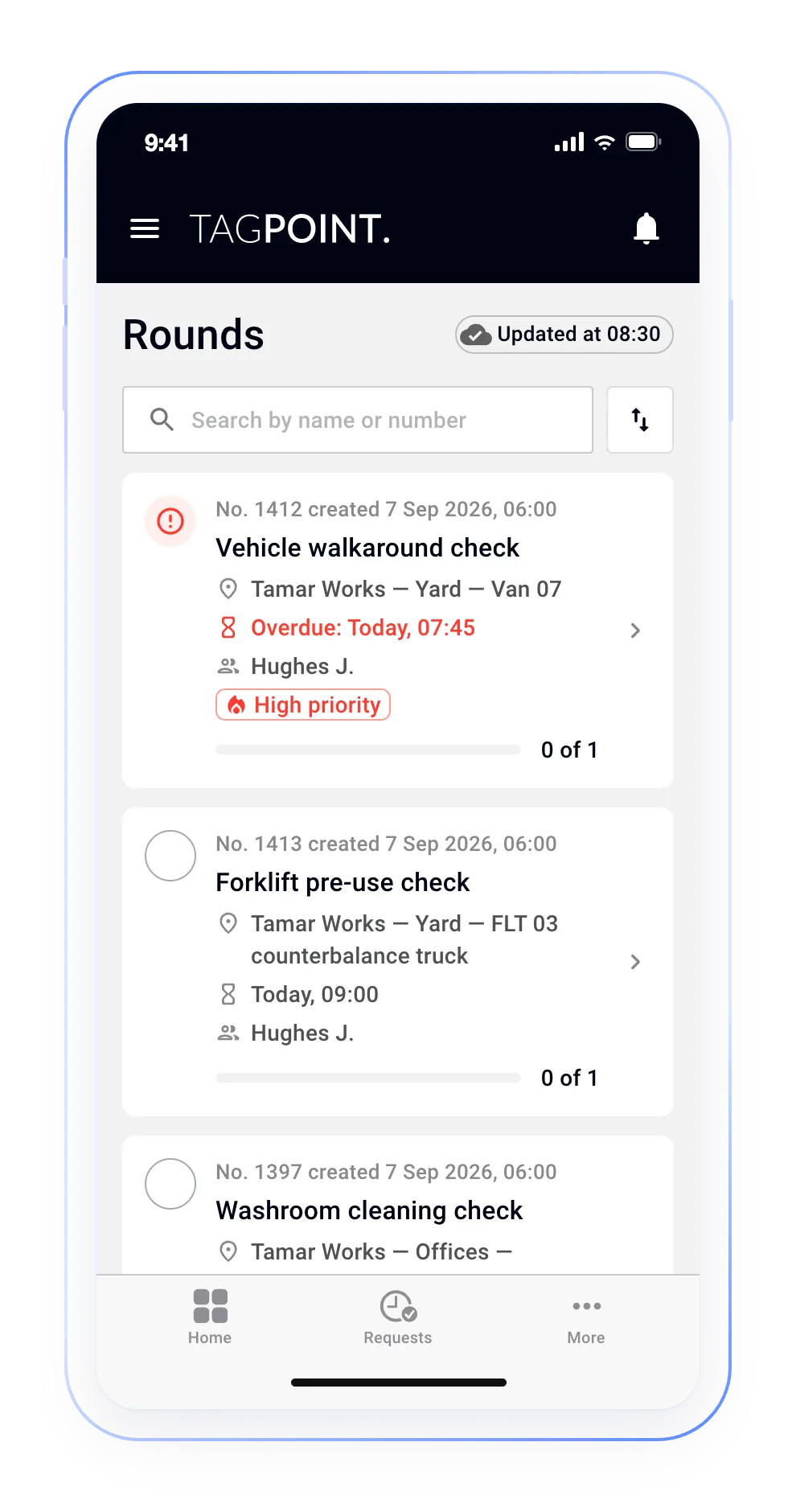
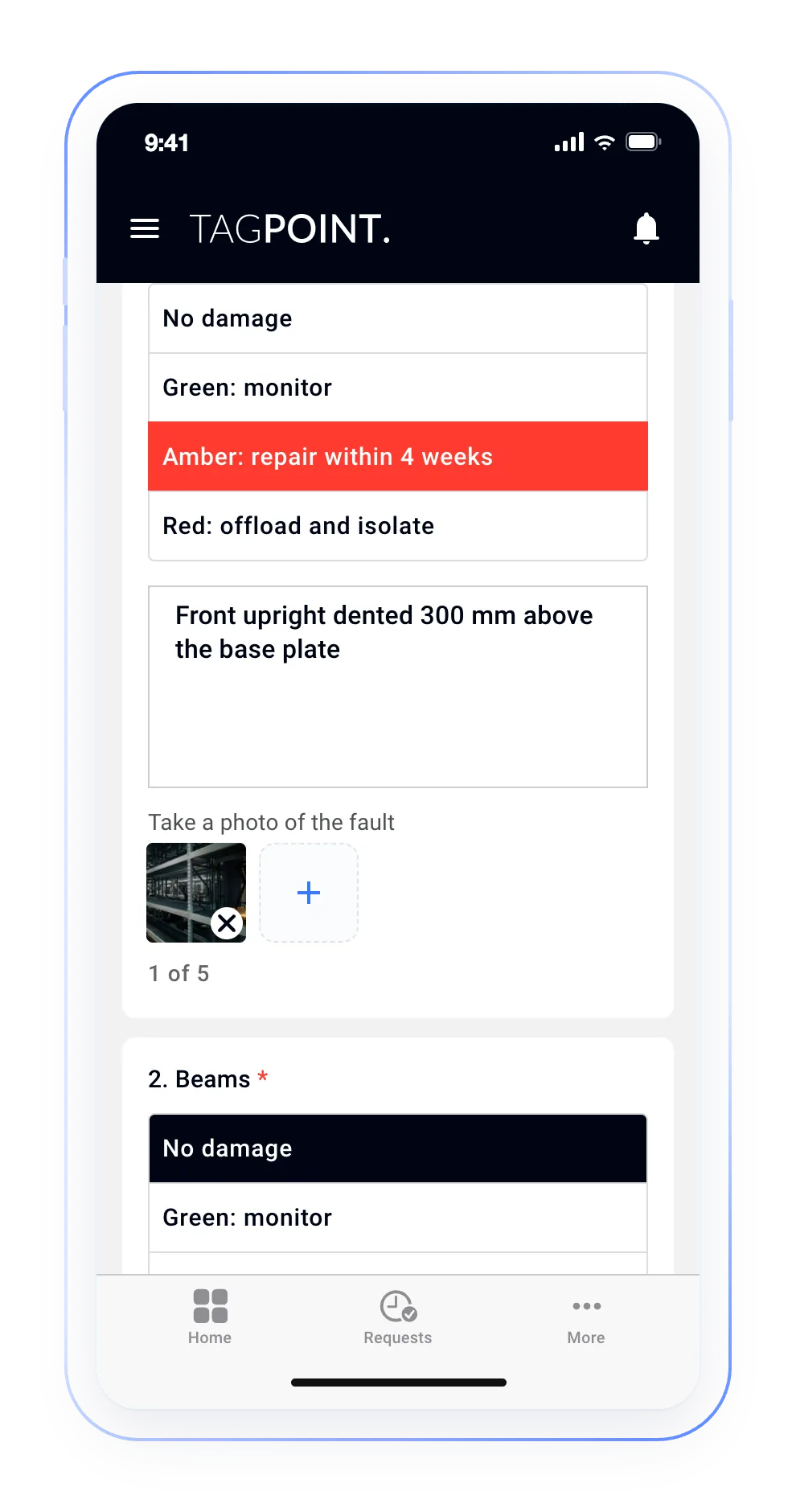
The weekly racking inspection in today's checks, and an amber upright with its comment and photo
Amber and red raise issues. An amber or red answer asks for a comment and a photo, and raises an issue for the PRRS or the repair contractor. Amber gets a deadline within four weeks. Red raises its own issue with a deadline of hours, not days, so it reaches the PRRS straight away. If either runs past its deadline, the manager is told.
A weekly schedule with a deadline. The inspection is set up as a weekly check assigned to a person or a role. If it is not done by its deadline, the manager is told.
A history per run. Every inspection is kept with the inspector's name and the time, and every issue keeps its photos, comments, who closed it and when. You can print any inspection or export report tables to Excel for the expert inspector or your insurer.
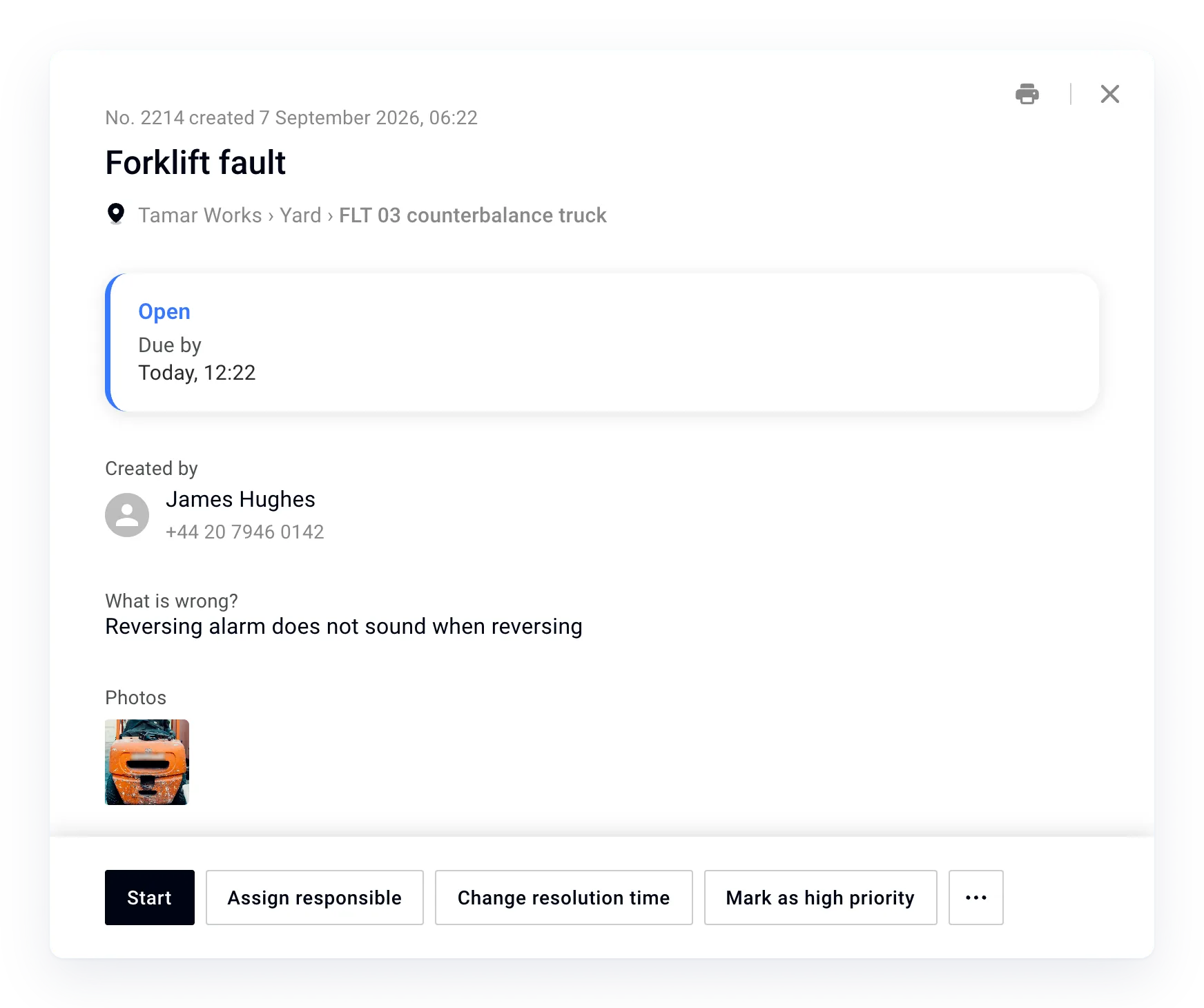
A failed item becomes an issue with an owner, a photo and a deadline
Anyone can also scan the same label with their phone camera to report a problem without the app, which makes immediate reporting much more likely after a knock. Read more about racking inspections in TagPoint, or how it fits warehouses. For a real example, see how a retail chain moved forklift and racking inspections off paper.